Merge Energy Efficiency With Plumbing & HVAC Upgrades
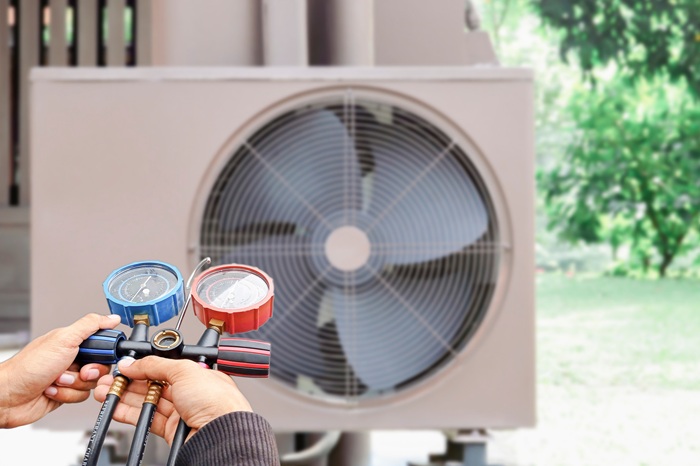
Lower utility bills and better comfort often come from tackling the plumbing and HVAC systems together. Hot water production, circulation, distribution piping, space heating and cooling, ductwork, and controls all interact.
Addressing them as a single efficiency plan avoids “whack-a-mole” fixes—like adding a high-SEER2 system to a leaky duct network or installing low-flow fixtures on a water heater with poor recovery.
Modern Plumbing & Heating has seen that the biggest, most durable savings come from pairing right-sized HVAC with water- and heat-wise plumbing choices, then coordinating controls so equipment runs only when needed.
This article distills field-tested practices and current requirements so homeowners can plan integrated upgrades that perform across Minnesota’s heating-dominated climate.
Cut Water & Energy Waste With Targeted Plumbing Upgrades
On the hot-water side, the largest gains usually come from three levers: production efficiency, distribution efficiency, and demand reduction.
Production efficiency improves by selecting high-UEF equipment (e.g., heat pump water heaters for electric homes or high-UEF condensing gas heaters where electric isn’t practical) and by setting tank temperature per safety and fixture-mixing requirements with a thermostatic mixing valve.
Distribution efficiency improves by insulating all accessible hot and recirculation lines, minimizing pipe runs during remodels, and controlling recirculation with demand-based or smart timers rather than always-on loops.
Demand reduction comes from WaterSense fixtures, 1.28 gpf toilets, and aerators matched to task (e.g., 1.0–1.5 gpm lavatories vs. higher-flow kitchen tasks).
Here's How It Works
Leak avoidance and detection protect both energy and water budgets. Smart shutoff valves and sub-metered zone valves can identify abnormal flows. Paired with fixture-level upgrades, they prevent continuous losses that would otherwise keep a water heater firing.
Drain-water heat recovery (DWHR) is a proven option for vertical drains serving showers: a copper heat exchanger recovers part of the waste heat and preheats incoming cold water, effectively boosting delivered capacity without upsizing the heater. In cold climates, this can materially reduce winter electric demand for heat pump water heaters and cut burner time for gas units.
For integrated retrofits, coordinate plumbing upgrades with envelope and HVAC. If the home moves to a heat pump for space heating, consider a heat pump water heater to shift water-heating load off gas and unlock electrification incentives.
Where a recirculation loop is required for comfort, specify demand-controlled pumps (push-button or occupancy-sensor activation) and temperature set-backs. As a reference point and to align with your service standards and site language, see plumbing for categories that map to fixture installs, pipe repairs, water heaters, and filtration.
Right-Sizing HVAC & Tight Ducts: The Foundation of Low Energy Use
Load calculation accuracy drives HVAC efficiency in Minnesota. Use ACCA Manual J (or equivalent hourly-bin software) with measured envelope data where available (attic R-values, window specs, blower-door results). Oversized equipment short-cycles, runs outside its high-efficiency envelope, and produces poor latent control in shoulder seasons.
Undersized systems force long runtime at high compression ratios. For heat pumps, evaluate Heating Seasonal Performance Factor 2 (HSPF2), low-ambient capacity at 5°F and 17°F, and balance point versus backup heat strategy. For furnaces, AFUE alone is not the whole story—duct losses and static pressure often erase the expected advantage.
Duct performance determines delivered efficiency. Target ≤0.08 in. w.c. per 100 ft equivalent length for trunks, design ≤0.5 in. w.c. total external static for typical residential air handlers, and specify R-8 insulation for attic runs with mastic-sealed joints.
Aim for ≤4% total leakage to outdoors (tested) on new or fully renovated systems; seal with water-based mastic and mesh, not tape. Balance supply and return pathways in all closed-door rooms to avoid pressure imbalances that drive infiltration.
In existing homes, re-commissioning (repairing disconnected boots, sealing panned returns, adding jump ducts or transfer grilles) often yields double-digit energy and comfort gains without replacing equipment. See your heating services for scope alignment: HVAC.
Distribution choices interact with equipment selection. Variable-speed (ECM) blowers and inverter heat pumps hold efficiency across part-load conditions, but only if ducts allow design airflow at acceptable static pressure.
Where ducts are constrained, ductless or short-run ducted systems are appropriate, provided line lengths and defrost strategies are modeled for Minneapolis–St. Paul designed temperatures. Hydronic homes benefit from outdoor reset controls, properly sized emitters, and delta-T setpoints that keep condensing boilers in condensing mode (return temps < 130°F) for most of the season.
Smart Thermostats, Zoning, & Controls: Coordinating Plumbing & HVAC
Controls align equipment runtime with real demand. Smart thermostats add schedule optimization, occupancy detection, and weather-aware setpoints; in multi-zone homes, communicating systems can stage and modulate to reduce cycling.
For hydronic systems, outdoor reset and indoor feedback (from representative rooms) trim supply temperatures to match load, raising seasonal efficiency. On the domestic hot water side, recirculation controls (timer + temperature, demand buttons, or flow sensors) prevent 24/7 pump operation.
Real value emerges when controls coordinate multiple systems. Zoning—via duct dampers or hydronic zone valves—reduces simultaneous over-conditioning and allows lower setpoints in infrequently used spaces.
Pairing zoning with supply-air temperature limits and minimum airflow rules avoids coil freeze or furnace limit trips. In mixed-fuel homes, “lockout” logic can disable electric-resistance backup above a chosen outdoor temperature and bias a dual-fuel furnace only when heat pump capacity falls short of load.
Domestic hot water priority in hydronics prevents cold showers while limiting peak electrical demand.
Interoperability matters. Choose thermostats and zone controllers that expose granular settings (compressor minimum on-time, cycle rates, droop) and that integrate with water heater demand response if available from the utility.
In retrofit contexts, confirm that control wiring supports the required stages and sensors; where not, wireless add-ons or relay panels can bridge the gap without opening finished walls. Commissioning is critical: verify setpoint tracking, damper travel, pump schedules, defrost behavior, and lockout temperatures at handoff.
Calculating Energy Savings & Payback With Defensible Methods
Use a baseline-to-post methodology grounded in load and efficiency. For space conditioning, estimate annual heating load (MMBtu) from a Manual J model or utility normalization (heating degree days, HDD) and convert equipment efficiencies to site energy.
For example, annual heating kWh for a heat pump ≈ (Annual Heating Load in Btu) ÷ (Average COP × 3,412). For furnaces, annual therms ≈ (Annual Heating Load in Btu) ÷ (AFUE × 100,000). For domestic hot water, start with gallons/day, inlet/outlet delta-T, and water’s specific heat: Annual DHW Btu ≈ 8.34 × ΔT(°F) × gallons/day × 365. Apply UEF to translate to kWh or therms.
Monetize savings with current tariffs. Annual $-savings = (kWh saved × $/kWh) + (therms saved × $/therm) + (water saved × $/gal + sewer $/gal). Where a project shifts fuel (e.g., gas furnace to cold-climate heat pump), include both avoided gas and added electricity at seasonal COP (not nameplate). Add maintenance deltas (e.g., fewer cleanings for sealed-combustion appliances, fewer repairs on right-sized systems). For stacked measures (duct sealing + heat pump), use interaction factors so totals aren’t overstated.
Then compute cashflow metrics. Simple Payback (years) = (Net Project Cost after incentives) ÷ (Annual $-savings). For a fuller picture, calculate Net Present Value (NPV) with a homeowner discount rate and realistic escalation for energy prices.
Internal Rate of Return (IRR) is useful when comparing alternatives (e.g., condensing furnace + duct remediation vs. cold-climate heat pump + panel upgrade). Document assumptions, reference model outputs, and—where available—attach test results (blower door, duct leakage) to substantiate savings claims.
Minnesota Incentives & Rebates for Efficient Plumbing/HVAC Upgrades
Federal tax credits under Internal Revenue Code §25C allow 30% credits up to annual caps: $1,200 combined for envelope upgrades and certain HVAC (e.g., central AC), and a separate $2,000 cap for heat pumps and heat pump water heaters.
Credits apply to qualifying equipment installed 2023–2025 and are claimed on IRS Form 5695. Starting in 2025, manufacturers must provide a Qualified Manufacturer Identification Number on eligible equipment. ENERGY STAR maintains eligibility summaries by equipment type, including SEER2/EER2 thresholds for central AC and “Most Efficient” and cold-climate requirements for air-source heat pumps.
Minnesota’s state-administered rebate programs funded by the Inflation Reduction Act are phasing in. As of October 2025, the Minnesota Department of Commerce notes that the Home Electrification and Appliance Rebates (HEAR) and HOMES programs have not fully launched statewide; posted materials describe planned rebate levels (e.g., up to $8,000 for cold-climate heat pumps and up to $1,750 for heat pump water heaters for income-qualified households) and a phased rollout under the Save Energy Minnesota umbrella. Homeowners should verify the current launch status before purchase if relying on these rebates.
Utility incentives remain active. CenterPoint Energy’s Minnesota residential thermostat rebate offers $50 for qualifying smart/Wi-Fi programmable thermostats installed in calendar year 2025 (one per gas service address).
Xcel Energy and local partners operate Home Energy Squad visits in the Twin Cities (joint Xcel/CenterPoint offering) that identify cost-effective upgrades and may provide direct-install measures; separate utility rebates for heat pump water heaters and other measures may be available regionally.
How Modern Plumbing & Heating Can Help & What to Do Next
Modern Plumbing & Heating coordinates plumbing, HVAC, and controls work as one plan: water heater selection (including heat pump options), fixture upgrades, recirculation controls, duct sealing and re-design, right-sized heat pumps or furnaces, and commissioning of smart thermostats and zoning.
For Brooklyn Park, MN homes, a typical pathway starts with a load calculation and energy assessment, then sequences quick-win items (duct sealing, pipe insulation, aerators) before equipment swaps so savings compound.
Have questions or want a proposal that references the calculations above and the latest rebates? Call 763-639-1632 or contact us.